CasaViz - Property visualisation ordering
CasaViz - Property visualisation ordering
(Role)
(Role)
UX Designer
UX Designer
(Client)
(Client)
CasaViz
CasaViz
(Year)
(Year)
2023
2023
(Role)
Lead UX Designer
(Client)
N/A
(Year)
2023
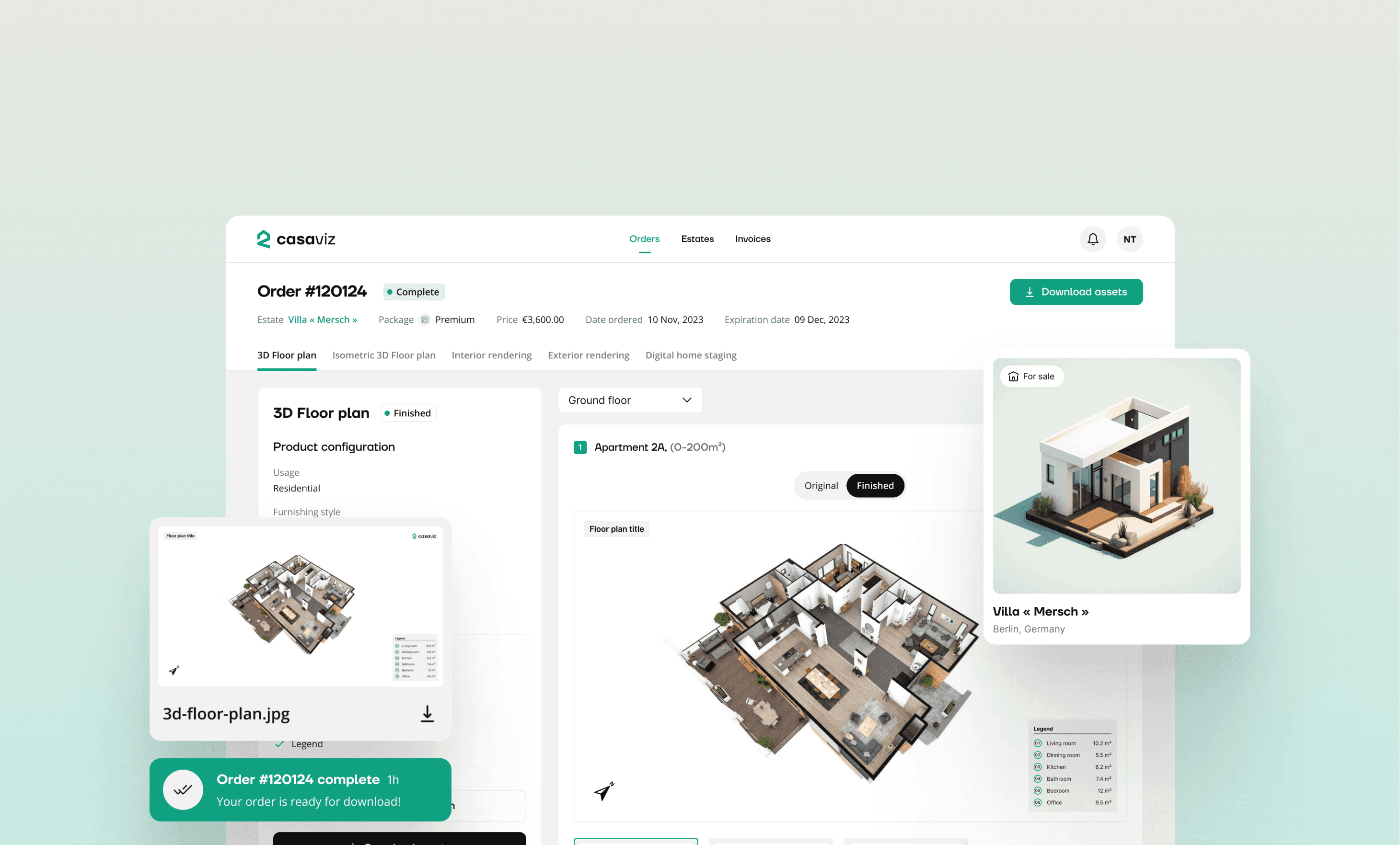
Real estate professionals spend hours managing property assets across disconnected tools — briefing agencies, chasing files, coordinating orders for floor plans, renders, and photography. CasaViz needed to replace that chaos with a single, guided platform. I led product design end-to-end, from discovery through to launch.
The Goal
Design an ordering and management platform for property visualisation — serving agents, managers, and developers across varying property types, package complexity, and post-order customisation needs. The core tension: enough flexibility for power users, enough guidance for first-timers.
Design an ordering and management platform for property visualisation — serving agents, managers, and developers across varying property types, package complexity, and post-order customisation needs. The core tension: enough flexibility for power users, enough guidance for first-timers.
Design an ordering and management platform for property visualisation — serving agents, managers, and developers across varying property types, package complexity, and post-order customisation needs. The core tension: enough flexibility for power users, enough guidance for first-timers.
Key challenges
→ Complexity without overwhelm — the platform needed to handle multi-floor houses, single-unit apartments, and everything between, without making simple use cases feel like enterprise software.
→ Post-order continuity — ordering was only half the journey. Users still needed to upload files, select styles, and customise each product after checkout. Designing that second phase as a natural continuation — not a separate experience — was critical.
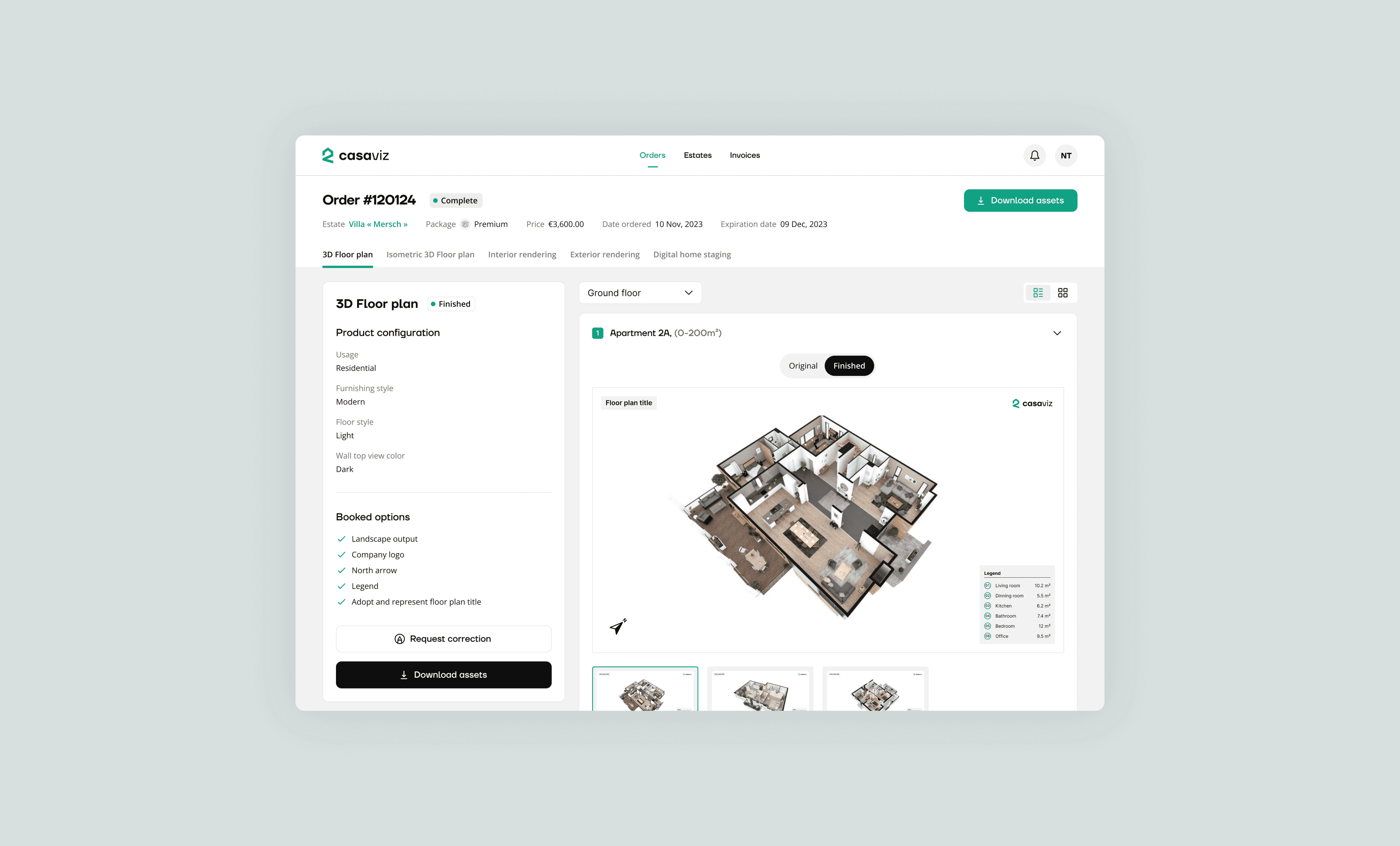
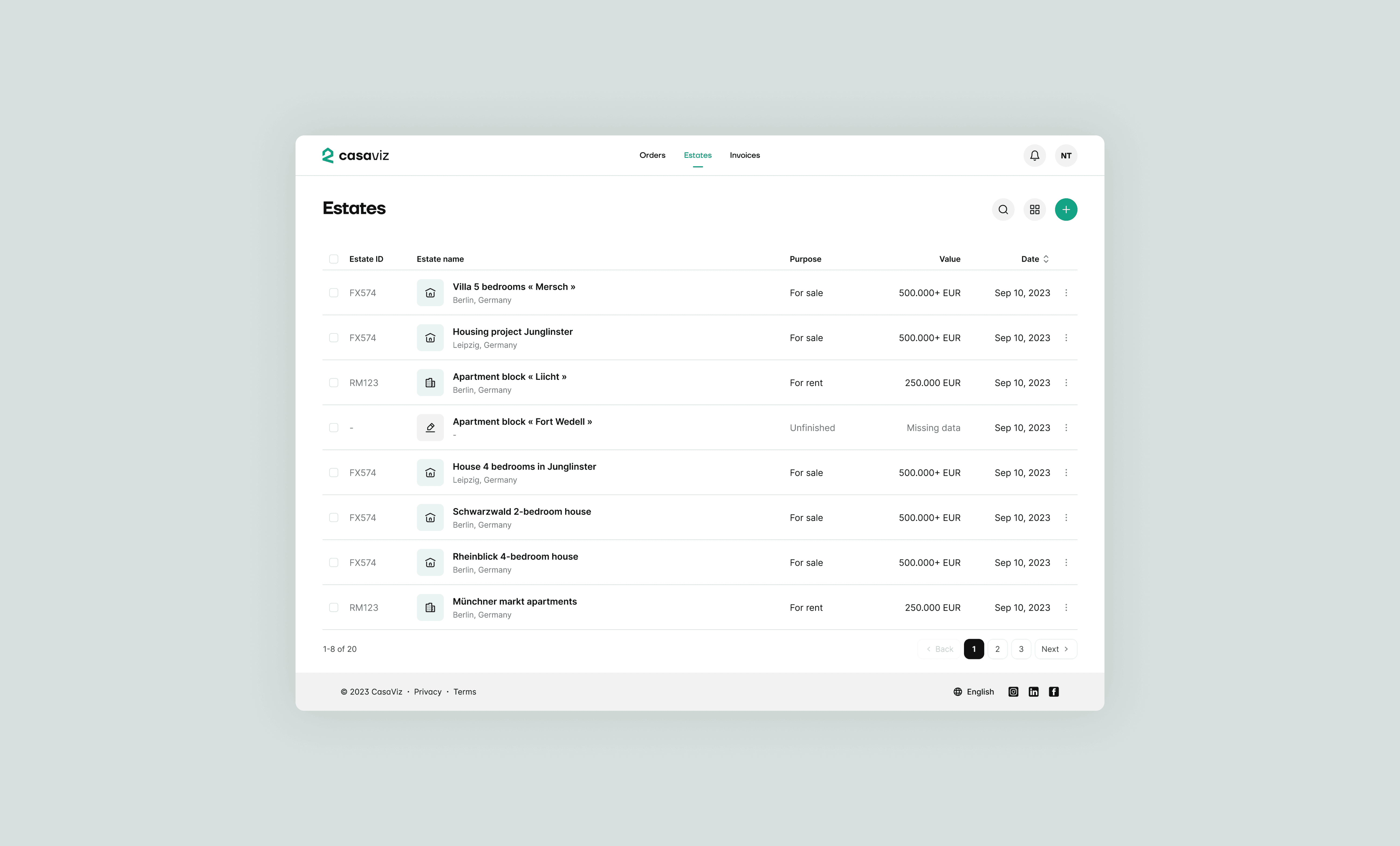
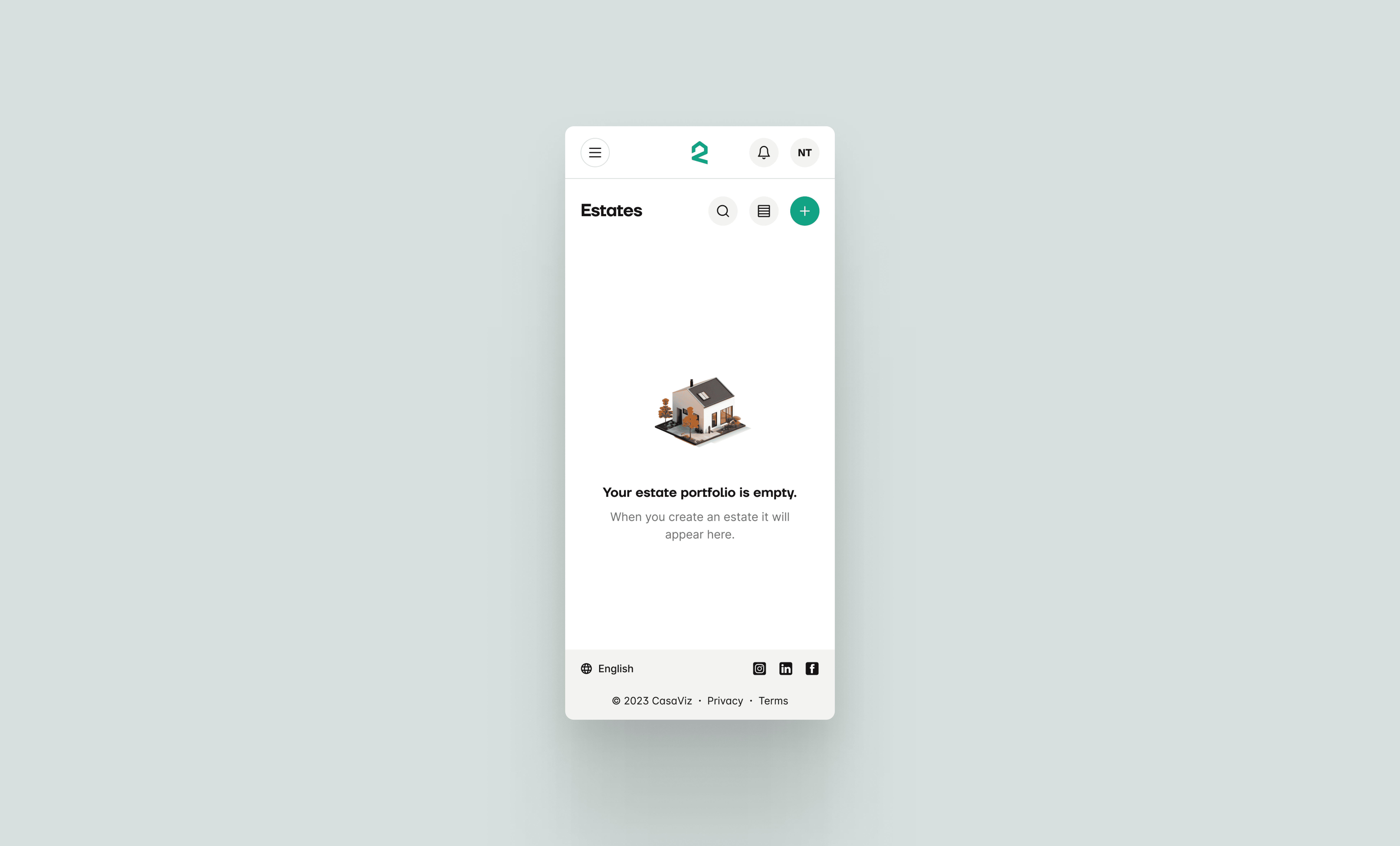
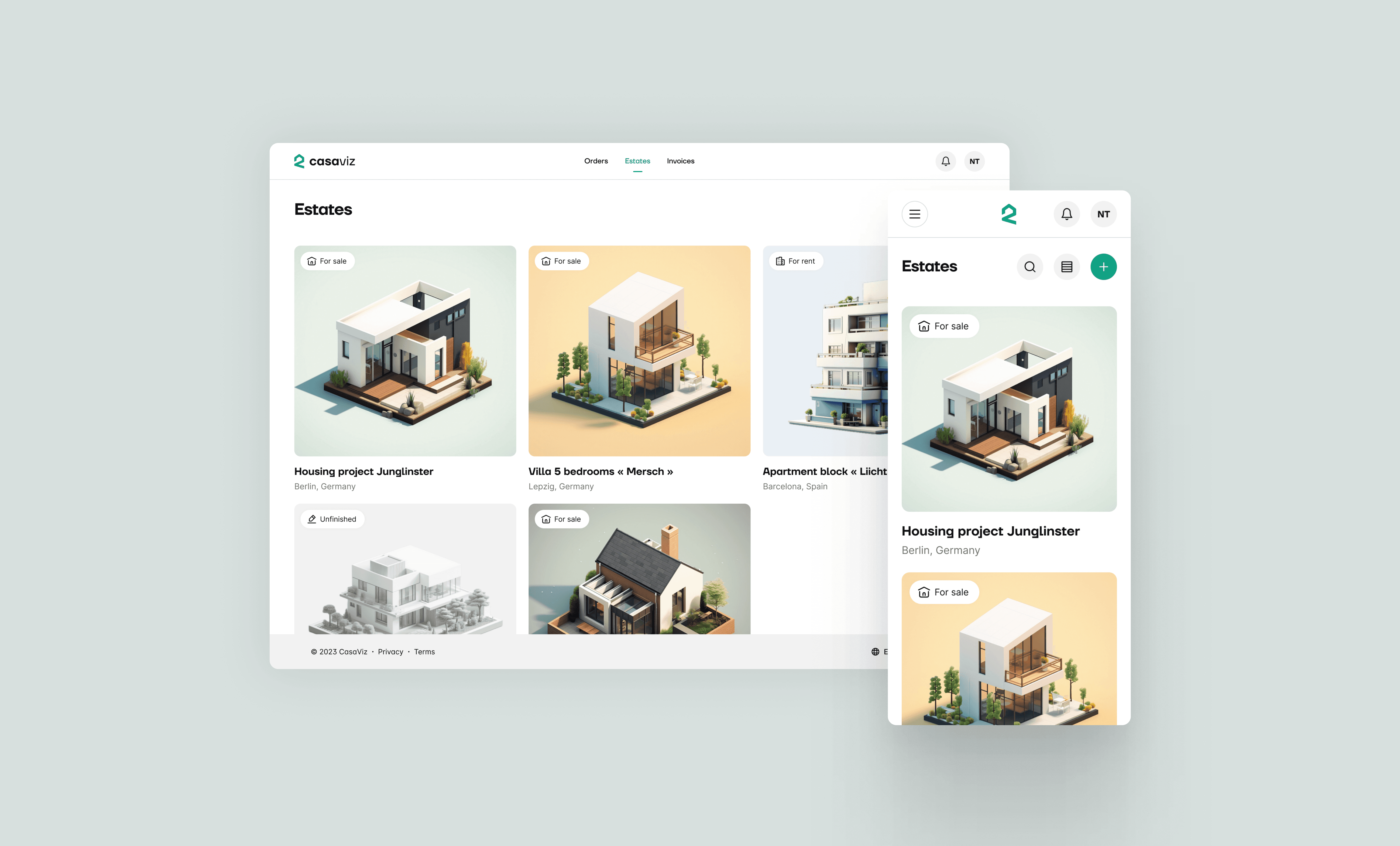
→ Multi-estate management — property managers aren't handling one listing. The customer portal needed to make tracking orders, downloading assets, and managing invoices feel organised at scale.
→ Complexity without overwhelm — the platform needed to handle multi-floor houses, single-unit apartments, and everything between, without making simple use cases feel like enterprise software.
→ Post-order continuity — ordering was only half the journey. Users still needed to upload files, select styles, and customise each product after checkout. Designing that second phase as a natural continuation — not a separate experience — was critical.
→ Multi-estate management — property managers aren't handling one listing. The customer portal needed to make tracking orders, downloading assets, and managing invoices feel organised at scale.
→ Complexity without overwhelm — the platform needed to handle multi-floor houses, single-unit apartments, and everything between, without making simple use cases feel like enterprise software.
→ Post-order continuity — ordering was only half the journey. Users still needed to upload files, select styles, and customise each product after checkout. Designing that second phase as a natural continuation — not a separate experience — was critical.
→ Multi-estate management — property managers aren't handling one listing. The customer portal needed to make tracking orders, downloading assets, and managing invoices feel organised at scale.
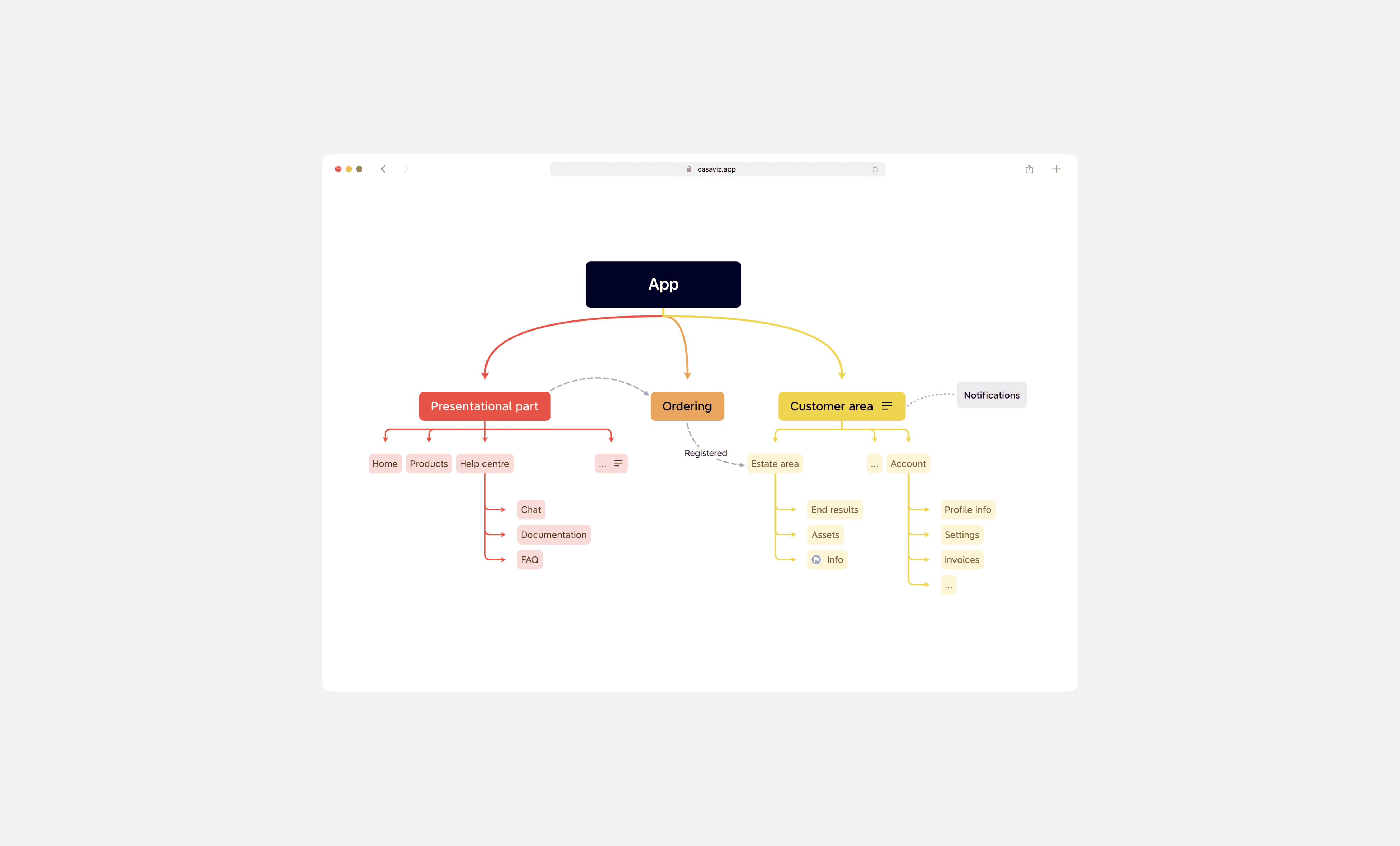
High-level information architecture
High-level information architecture
Uncovering user needs
Interviews with real estate agents and property managers surfaced two consistent themes: they didn't want to become experts in visualisation products, and they didn't want to make the wrong choice for a property they were trying to sell. The design response was a guided flow that reduced decisions without removing control.
Interviews with real estate agents and property managers surfaced two consistent themes: they didn't want to become experts in visualisation products, and they didn't want to make the wrong choice for a property they were trying to sell. The design response was a guided flow that reduced decisions without removing control.
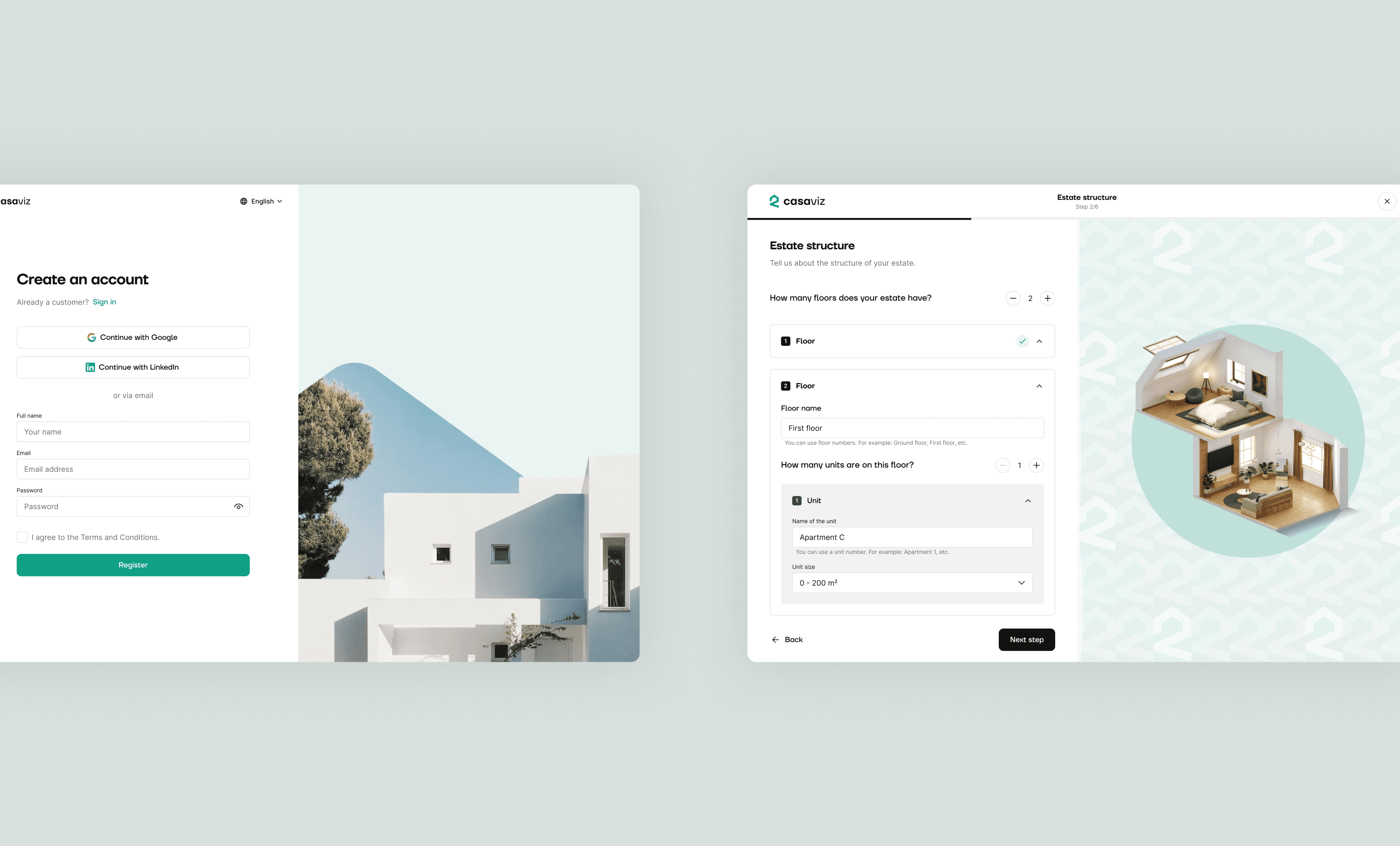
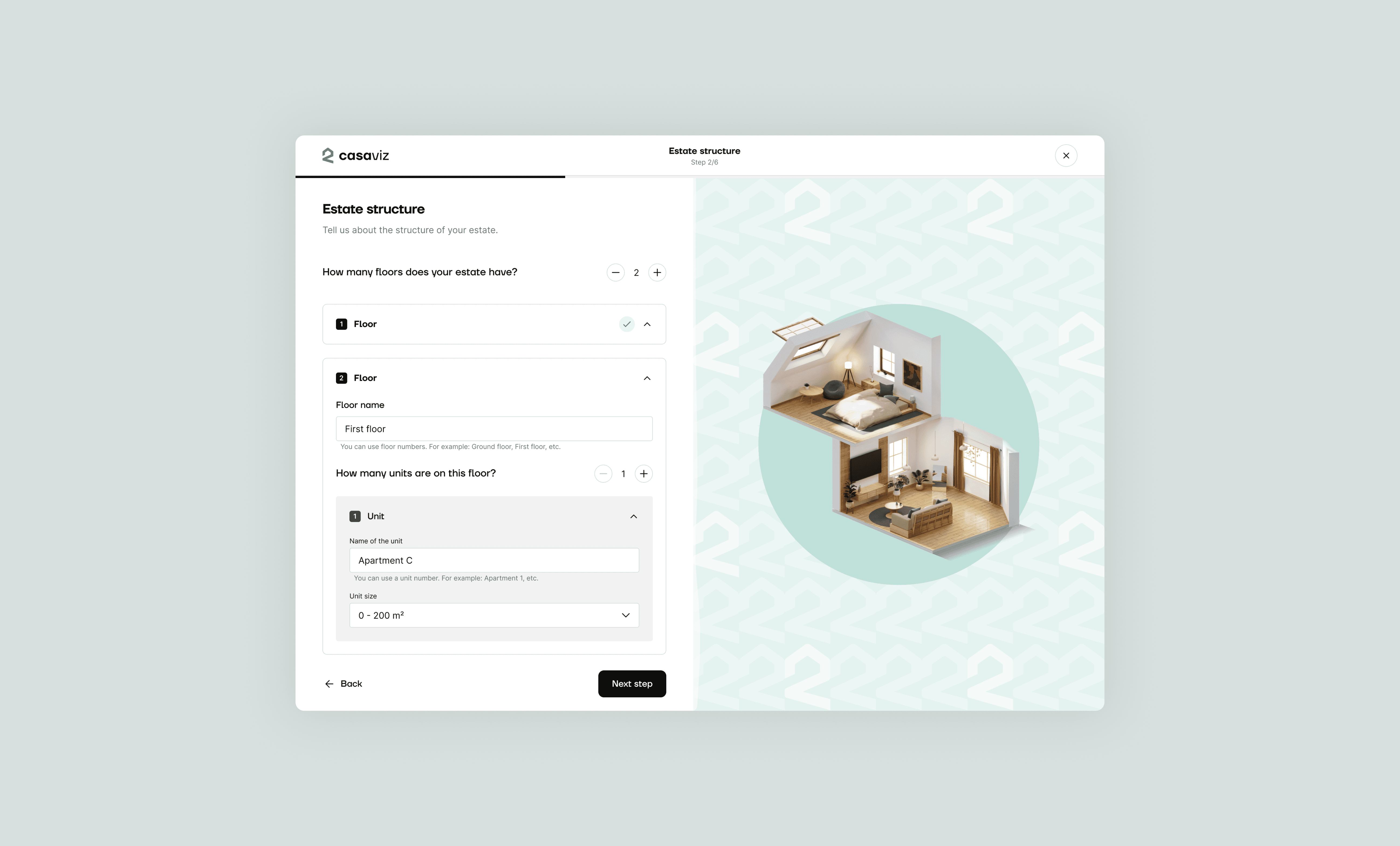
Estate creation
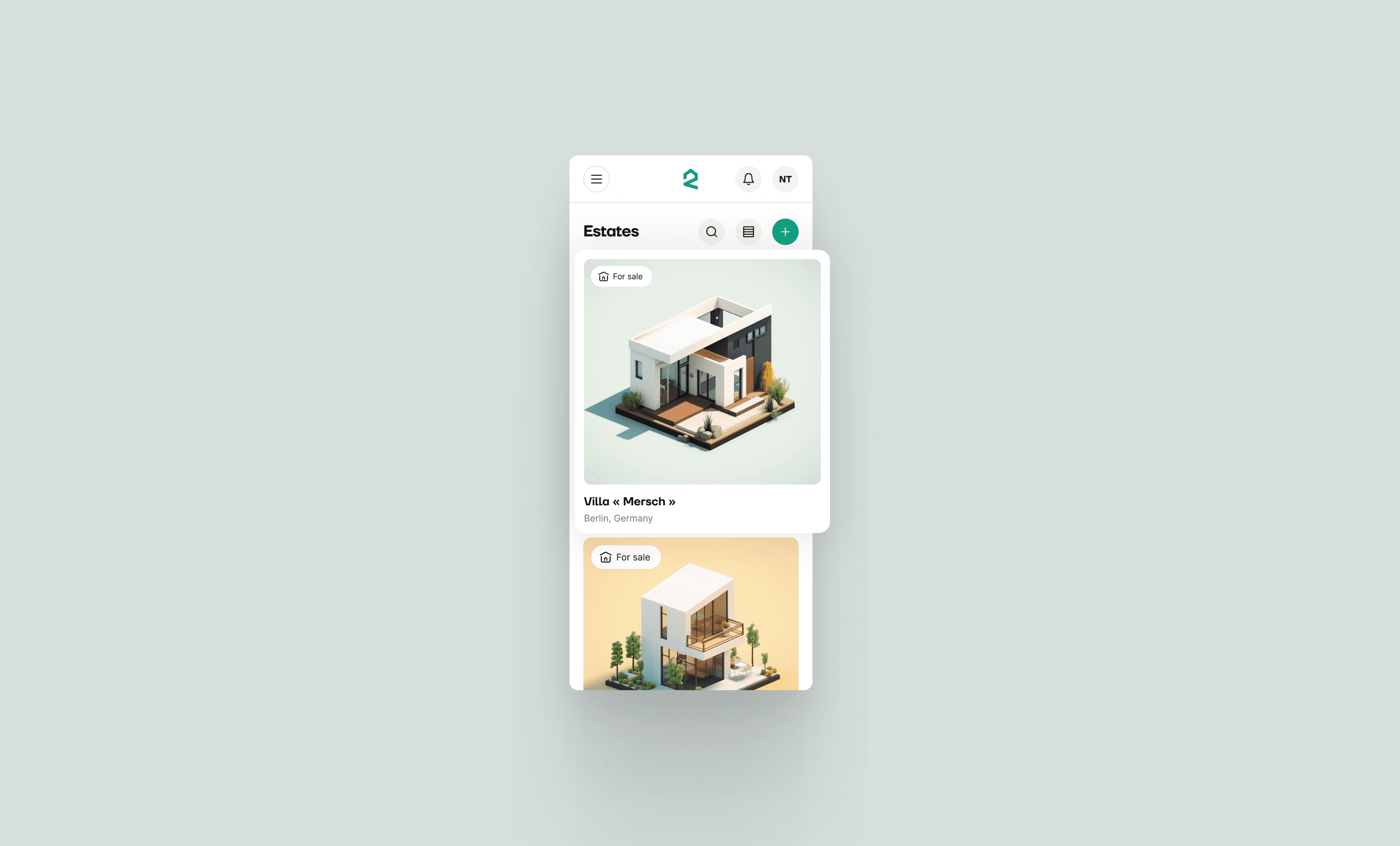
A step-by-step property setup tool — estate name, purpose, number of floors and units — that uses inputs to generate tailored package recommendations rather than presenting users with an open catalogue.
A step-by-step property setup tool — estate name, purpose, number of floors and units — that uses inputs to generate tailored package recommendations rather than presenting users with an open catalogue.
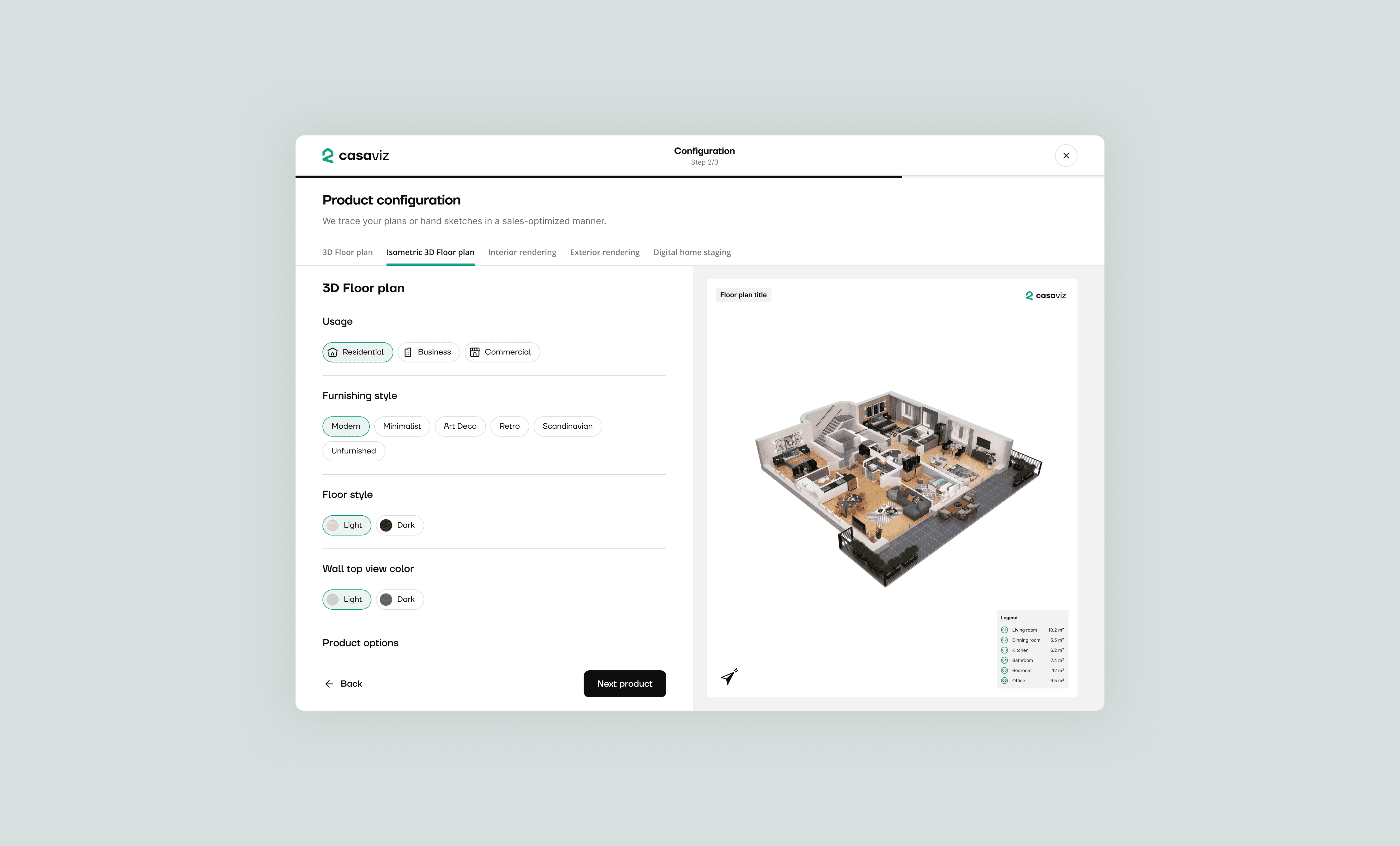
Order Configuration
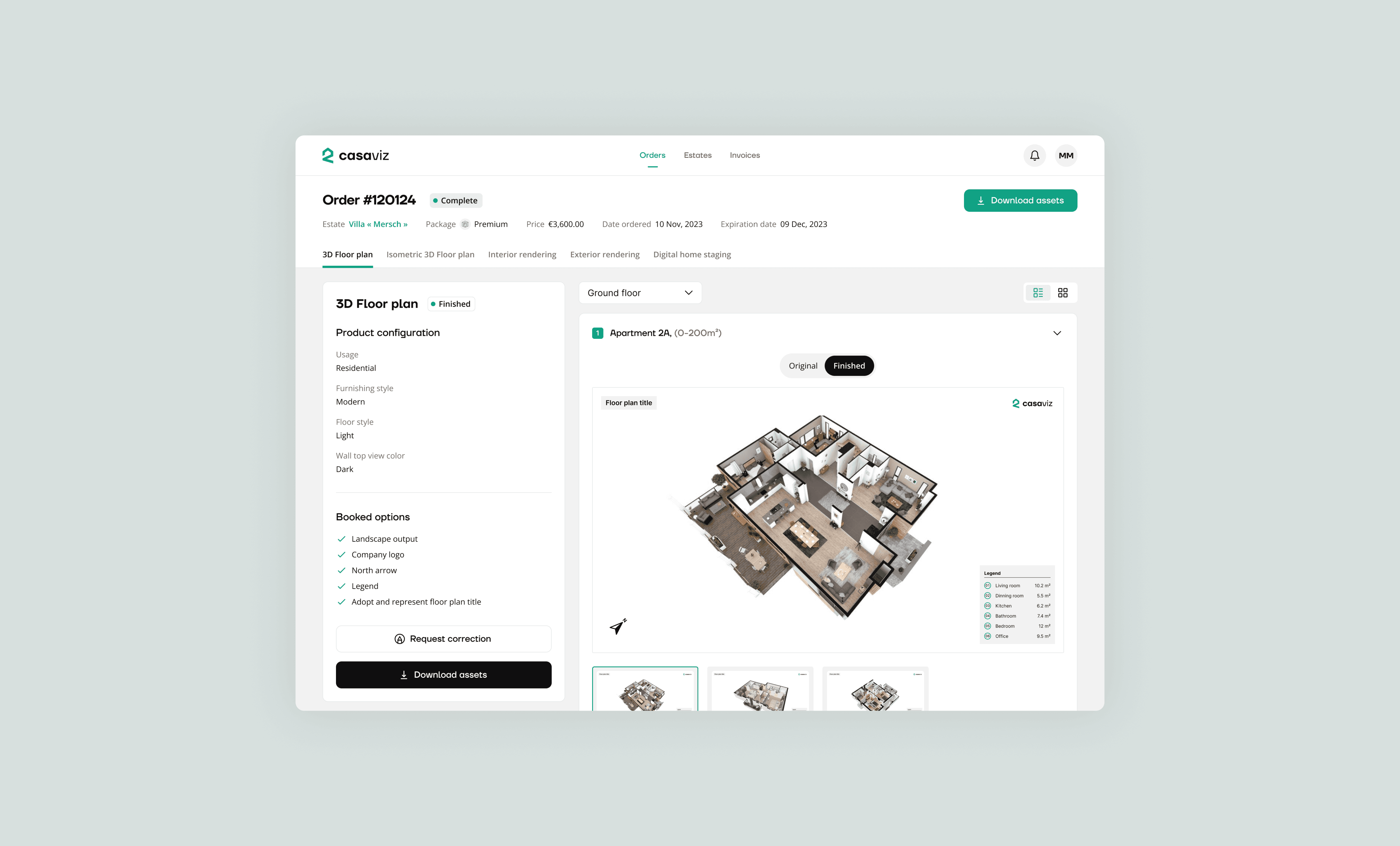
Post-checkout, users customise each product in their order: uploading source files, selecting formats, colours, and styles. Designed as a natural continuation of the order flow rather than a separate task — keeping context intact across both phases.
Post-checkout, users customise each product in their order: uploading source files, selecting formats, colours, and styles. Designed as a natural continuation of the order flow rather than a separate task — keeping context intact across both phases.
Customer portal
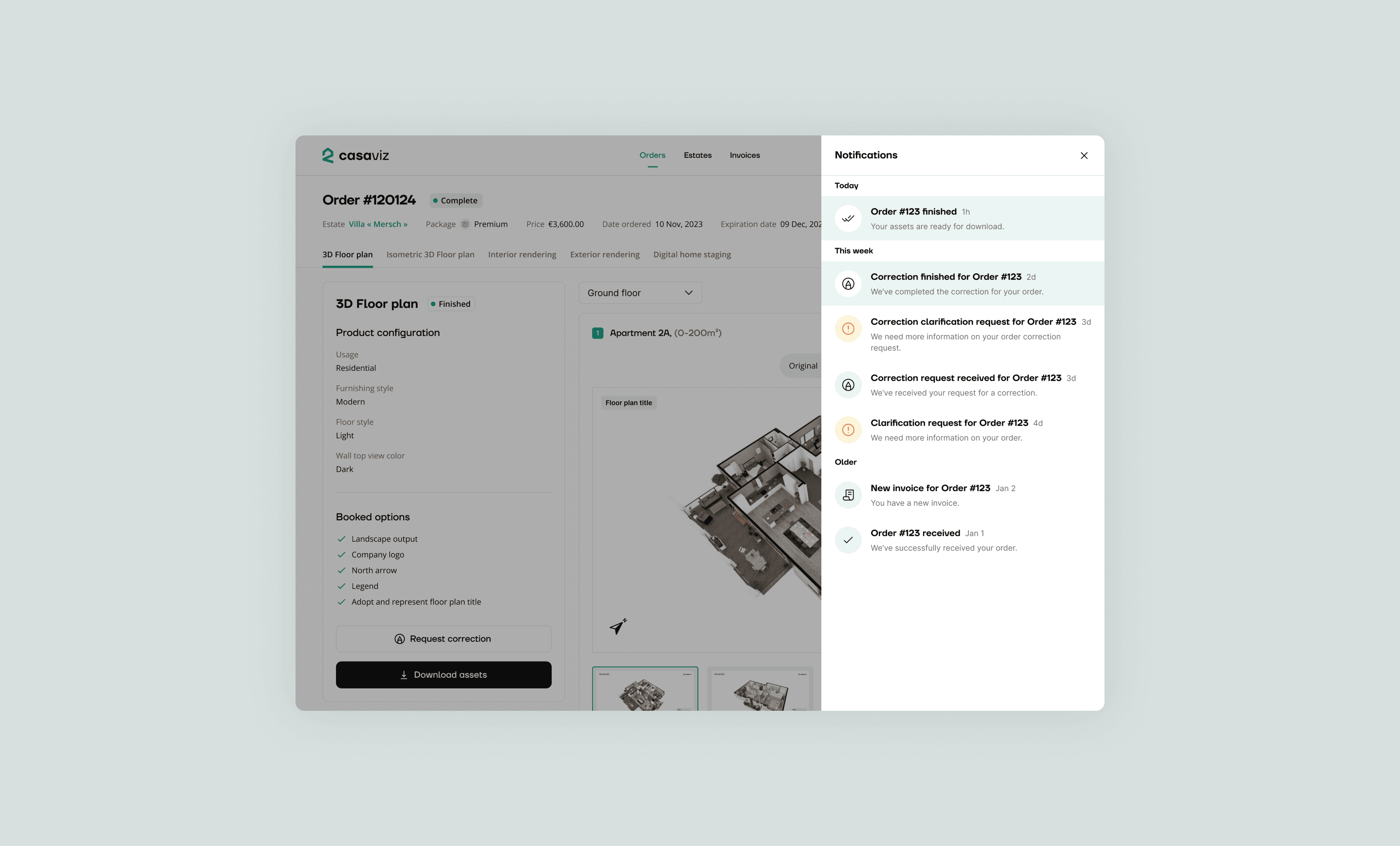
A single hub for managing all active and past orders, downloading completed assets, and tracking invoices — built for property managers handling multiple estates simultaneously, not just one-off users.
A single hub for managing all active and past orders, downloading completed assets, and tracking invoices — built for property managers handling multiple estates simultaneously, not just one-off users.